
Practical Guidance for Engineers, Buyers, and Production Teams Building Smaller, Faster Diagnostic Instruments
You’ve just built the first prototype of a new benchtop analyzer. The optics are dialed in, the fluidics are flowing, and the firmware team is happy. Then testing shows the sample block takes 40 seconds longer to reach temperature than the assay allows, and one end of the block reads a full degree cooler than the other. Sound familiar?Choosing a micro-cartridge heater for diagnostic equipment comes down to four things: bore fit, watt density, supply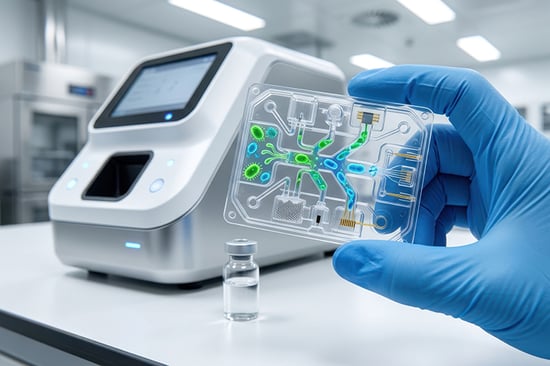 voltage, and how you’ll control temperature. Get those right early, and you’ll get fast warm-up, tight temperature uniformity, and years of reliable service from a heater small enough for your most compact instrument.
In diagnostics, temperature isn’t a supporting detail. It’s part of the assay. A PCR run, an immunoassay incubation, or a blood chemistry reaction only delivers a result you can trust when the sample reaches the right temperature, gets there quickly, and stays there. Miss by a degree or two, and you may see slower reactions, weaker signals, or a run that has to be repeated. For a lab, that means lost time and wasted reagents. For a patient waiting on an answer, it means a longer wait.
Meanwhile, instruments keep shrinking. Point-of-care and benchtop formats leave less room for everything, including heat. That’s where micro-cartridge heaters earn their place. They deliver concentrated, controllable heat in a package small enough to fit inside a sample block, a fluid manifold, or a reagent cartridge holder.
Whether you’re the design engineer specifying the heater, the buyer sourcing it, or the production lead who has to install hundreds of them, this guide walks through what to consider so you get the right heater the first time.
What Makes a Cartridge Heater “Micro?”
If you’ve worked with standard cartridge heaters, you already know the basic idea: a resistance coil packed in insulation inside a metal sheath, built to slide into a drilled bore and heat the metal around it. A micro-cartridge heater works the same way, scaled down to diameters as small as 1/8" (about 3 mm).
The difference is where it fits. A micro heater can go where a 1/4” or 3/8” unit simply can’t, like a thin aluminum sample block or a compact manifold tucked between an optical path and a pump.
Backer Hotwatt builds three families of micro-cartridge heaters, each suited to a different kind of job:
|
Family |
Diameters |
Length |
Power |
Where it shines in diagnostics |
|
Low-Watt |
1/8”, 5/32”, 3/16" |
Up to 12” |
10–12 W per inch, down to 0.5 W; max 2 A |
Gentle, steady holding temperatures and long service life |
|
Superwatt |
1/8” |
Up to 8” |
Up to 60 W/in²; up to 3.5 A |
Fast warm-up and quick recovery in tight spaces |
|
SunRod |
1/8”, 4 mm |
From 0.4” |
Split sheath; rated 25,000+ hours |
Serviceable designs with heat right to the tip and no cold spots |
Each family can be customized for size, sheath, leads, terminations, wattage, and voltage, so you’re not stuck designing your instrument around a catalog part.
Six Questions to Ask Before You Specify
The best heater conversations start with a few good questions. Working through these early will save you rounds of revisions later.
- How much room do you really have? Start with the bore you can drill and the length of the part you need to heat. Match the heated length to the zone that matters, so you’re not spending power warming mounting hardware.
- How much power do you need, and how fast? Here’s a quick back-of-the-envelope example. Say a 40 g aluminum sample block has to go from 25 °C to 95 °C in 60 seconds. That works out to about 42 W, or roughly 55 W once you add margin for heat lost to air and mounts. Split across two 1/8” heaters, that’s a job for a higher watt-density design like Superwatt. Relax the warm-up spec to two minutes, and a longer-life low-watt design comes back into play.
- How hard can you push the watt density? Higher watt density heats faster, but the sheath runs hotter. Lower watt density runs cooler and lasts longer, and can stretch service life to 5 to 10 years in mission-critical use. If your instrument is expected to run for years with minimal service, that trade-off deserves a close look.
- What will your power supply deliver? Many benchtop instruments run on low-voltage DC rails, while others use line power. Share your supply voltage and current limit up front so the coil can be wound to match. Heater output changes with the square of the voltage, so even a modest mismatch can leave you underpowered or running too hot.
- Where will the leads go? Inside a crowded instrument, leads often have to bend sharply, thread through tight channels, or live near fluids. Flexible leads, sealed lead ends, bushings, and flanges are all worth discussing. Your production team will thank you, too: leads that route cleanly make assembly faster and more consistent.
- How will you sense and control temperature? Tight control depends on a good, closed loop. Decide whether the sensor sits in the block, near the sample, or integrated with the heater, and plan the bore layout around it. As a rule of thumb, keep the control sensor within 1/2” of the heater wherever possible to limit lag and overshoot.
Which Micro-Cartridge Heater Fits Your Diagnostic Application?
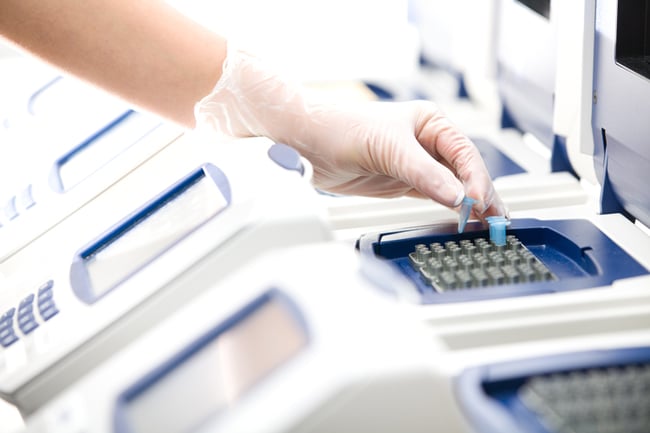
Every instrument asks something a little different of its heater. A thermal cycler lives and dies by ramp rate. An incubation block cares more about holding a steady, even temperature for hours at a time. Here’s how the most common jobs map to design priorities:
|
Application |
What matters most |
Where to start |
|
Thermal cycling (PCR, isothermal amplification) |
Fast ramp rates, uniform block temperature, and repeatable cycles |
High watt density (Superwatt), with multiple heaters spaced for even heat |
|
Sample and incubation blocks |
Tight uniformity at a steady setpoint |
Low watt for gentle, even heat, with full-length heating and no cold spots |
|
Blood/gas and chemistry analyzers |
Stable measurement chamber temperature in a compact footprint |
1/8” or 4 mm diameters with a tight fit in the sensor housing |
|
Fluid and reagent pre-warming |
Bringing liquid to temperature in a short flow path |
A heater in a metal manifold or a micro-circulation design |
|
Microfluidic valves and cartridges |
Very small zones, low power, and quick response |
Short SunRod or low-wattage units |
These aren’t hypothetical. Backer Hotwatt micro-cartridge heaters are already at work in diagnostic equipment, blood/gas analyzers, and mass spectrometry, along with gas chromatography and microfluidic valves.
Common Mistakes (and How to Avoid Them)
Here’s something that surprises a lot of teams: most early heater failures have less to do with the heater than with how it’s installed. A few of the usual suspects:
- A loose bore. Picture a heater that tests perfectly on the bench, then fails early in the field. Often the culprit is a bore that’s a few thousandths too large. Air gaps act as insulation, so the sheath overheats while the block stays cool. We recommend drilling and reaming no more than 0.002” over the nominal hole size, especially for high watt-density heaters.
- Too much watt density for the fit. If the bore can’t be held tight, or the part is made from a material that doesn’t conduct heat well, dial back the watt density instead of asking the heater to overpower the problem.
- Stressed leads. A sharp bend right at the lead exit, or a lead that rubs against a sliding drawer or moving stage, is a common failure point in compact instruments. Plan the routing early and ask about flexible or protected leads.
- Heating the wrong length. A heated section that sticks out past the block wastes energy and can overheat the lead end. Specify the heated length to match the part.
- Forgetting about service. If a heater may need replacing in the field, design for it from the start. SunRod’s split sheath expands to grip the bore when energized and contracts for easy removal, with no bonding or clamping. That’s good news for your field service team and for the lab waiting on a repaired instrument.
- For procurement: A heater that’s fully specified up front (bore size, heated length, voltage, wattage, leads, and operating environment) is easier to quote accurately and far less likely to need costly changes after the purchase order is placed. Ask for test data with each lot, so incoming inspection is quick and traceable.
- For production: Consistency matters as much as performance. Lead styles that route cleanly, terminations that match your connectors, and bore tolerances your machine shop can hold all make assembly smoother and cut down on rework.
- For everyone: Late-stage changes are where schedules slip and costs climb. Bringing a heater partner into the conversation early, while the design is still flexible, is one of the simplest ways to avoid them.
What Procurement and Production Teams Should Know
Heater selection isn’t only an engineering decision. The choices made at the design stage ripple out to purchasing and the production floor.
Get the Right Heater the First Time
The best micro-cartridge heater for a diagnostic instrument is the one that’s sized to the bore, matched to the power supply, and tuned to the assay’s temperature profile. Get those choices right early, and you’ll spare yourself redesigns, reruns, and field failures down the road.
Backer Hotwatt has partnered with medical equipment manufacturers for over 70 years. Our engineers work alongside your team to build micro-cartridge heaters to order, from sheath and leads to wattage and voltage, whether you need a few prototypes or a full production run.
Have a design on the drawing board? Share your bore size, heated length, supply voltage, and target temperature, and we’ll help you specify a heater that fits. Connect with a Backer Hotwatt engineer or call (978) 777-0070 to get started.
Frequently Asked Questions
What is a micro-cartridge heater?
It’s a compact cartridge heater, with diameters as small as 1/8" (about 3 mm), designed to slide into a drilled bore and heat the surrounding metal in space-constrained equipment such as diagnostic analyzers, lab instruments, and medical devices.
Which micro-cartridge heater works best for PCR or thermal cycling?
Fast ramp rates usually call for higher watt density, such as a Superwatt design, often with two or more heaters spaced for even heat. The right answer depends on block mass, warm-up time, and the power you have available.
How tight should the bore fit be?
Close. We recommend drilling and reaming no more than 0.002” over the nominal hole size. A loose fit traps air, which makes the heater run hot and shortens its life.
How long do micro-cartridge heaters last?
It depends on watt density, fit, and duty cycle. SunRod heaters are rated for 25,000 hours or more, and running at reduced watt density can extend life to 5 to 10 years in mission-critical applications.
When should we bring in a heater supplier?
As early as you can, ideally while bore sizes, power budgets, and lead routing are still flexible. Early input helps you avoid redesigns once tooling and test plans are locked in.
We'd love to hear about your next design. Connect with a Backer Hotwatt engineer or call (978) 777-0070 to get started.