
Key Factors in Choosing Flanged Heaters and How They Deliver Uniform Heating for HVAC
Selecting the right flanged heater is essential for ensuring the efficiency, safety, and longevity of any HVAC system. As commercial and industrial settings place higher demands on precision and energy efficiency, design engineers, facility managers, and system integrators must evaluate several technical and environmental factors before making a choice. The right heater not only delivers stable performance, it also protects system components, reduces operating costs, and supports long-term reliability.
Key Factors to Consider When Choosing Flanged Heaters 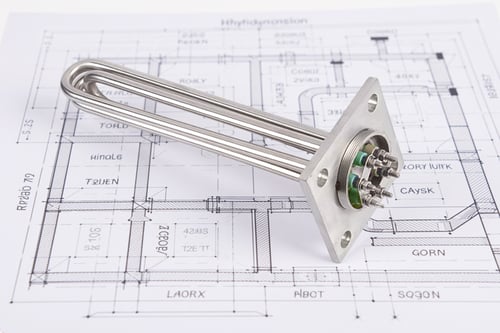
1. Heating Requirements
Start with a clear understanding of your application’s heating needs—target temperature range, required kilowatt capacity, and the type and volume of the medium being heated. Proper sizing ensures consistent performance while avoiding the inefficiencies of oversizing or undersizing.
2. Material Compatibility
The heater’s sheath and flange materials must be compatible with the medium. Stainless steel and Incoloy are common choices for their corrosion resistance and durability. Matching the material to the environment helps prevent premature failure and extends operational life.
3. Watt Density
Watt density, the power delivered per unit surface area, must align with the properties of the medium. High watt density can overheat sensitive fluids or cause scaling, while low density may produce sluggish heating. Consider viscosity, flow rate, and thermal sensitivity when selecting watt density.
4. Mechanical and Dimensional Fit
Choose the correct flange size, mounting method, immersion length, and number of elements to ensure proper installation and even heat distribution. Confirm ANSI flange ratings and pressure-temperature requirements match the vessel or duct.
5. Environmental and Operating Conditions
Account for ambient temperature, humidity, and potential exposure to corrosive or hazardous substances. In some cases, protective coatings, insulation, or NEMA-rated enclosures may be necessary to ensure safe and reliable operation.
6. Safety Features
Look for essential safety components like thermal cutouts, high-limit sensors, over-temperature protection, and pressure relief features. These safeguard both the heater and the broader HVAC system.
7. Maintenance and Serviceability
Choose heaters designed for easy installation and upkeep. Replaceable heating elements and accessible terminal enclosures simplify inspections and minimize downtime.
8. Customization Options
Many manufacturers offer customization for wattage, voltage, flange size, sheath materials, and controls. Custom solutions often provide the best fit for unique HVAC designs and performance goals.
Summary: Selection Criteria for Flanged Heaters
|
Factor |
Why It Matters |
|
Heating Requirements |
Ensures appropriate temperature and capacity |
|
Material Compatibility |
Prevents corrosion and extends service life |
|
Watt Density |
Balances efficiency and medium safety |
|
Mechanical Specifications |
Ensures proper fit and heat distribution |
|
Environmental Conditions |
Protects against harsh surroundings |
|
Safety Features |
Prevents overheating and system damage |
|
Control & Monitoring |
Supports precision and efficiency |
|
Maintenance |
Reduces downtime and service costs |
|
Customization |
Aligns performance with system needs |
By evaluating these factors, you can choose a flanged heater that delivers dependable, safe, and efficient performance throughout the life of your HVAC system.
How Flanged Heaters Ensure Uniform Heating in HVAC Systems
As HVAC systems evolve toward electrification and higher efficiency, flanged heaters have become an essential solution for consistent, reliable, and cost-effective heating. Their design enables them to heat liquids, gases, or air uniformly—an important requirement in both comfort and process-driven HVAC applications.
Here’s how flanged heaters deliver uniform heating throughout a system:
1. Direct Immersion for Efficient Heat Transfer
Flanged heaters immerse tubular elements directly into the fluid or air being heated. This direct contact minimizes heat loss and allows the entire medium to warm evenly and quickly.
2. Strategic Placement of Multiple Elements
Multiple heating elements are arranged across the flange to distribute heat uniformly inside the tank, vessel, or duct. This avoids hot spots or cold zones—especially beneficial in larger systems.
3. Precise Temperature Control and Monitoring
Modern heating systems use integrated thermocouples, RTDs, and thermostats to continuously monitor temperature in real time. These sensors automatically adjust power to maintain a consistent setpoint, helping ensure uniform performance and reliable operation. When connected to building management systems, they also provide enhanced visibility and early alerts, allowing potential issues to be identified and addressed before they impact performance.
4. Circulation for Greater Uniformity
When heating fluids, circulation pumps help distribute heat evenly throughout the tank or piping. Continuous flow eliminates temperature gradients and improves system efficiency.
5. High-Quality Materials and Construction
Durable, corrosion-resistant materials and well-insulated elements ensure steady, efficient heat transfer over the heater’s lifespan. This consistency supports long-term thermal uniformity.
Summary: How Flanged Heaters Promote Uniform Heating
|
Feature |
Uniform-Heating Benefit |
|
Direct Immersion |
Rapid, even heat transfer |
|
Multiple Elements |
Eliminates hot and cold spots |
|
Integrated Controls |
Maintains consistent setpoints |
|
Circulation Support |
Ensures even heat throughout fluids |
|
Durable Materials |
Provides long-term uniform performance |
Flanged heaters achieve uniform heating by combining direct immersion, strategic element layout, precise controls, and circulation when required. This ensures consistent performance, optimized energy use, and reliable temperature control across HVAC applications. There’s much more to explore about flanged heater applications, including the many benefits of relying on flanged heaters in HVAC systems, as discussed in this blog.
As an industry leader in the design and manufacture of custom flanged heaters, Backer Hotwatt understand the nuances and complexities involved in bringing new technologies to market. By collaborating early in the design process, we will help you develop an optimal electric heating solution for your HVAC application. Contact an engineer today to set up an exploration consultation to discuss your next HVAC heating project